Global Time Zones Shape Activity Peaks in Browser Multiplayer Strategy and Racing Games
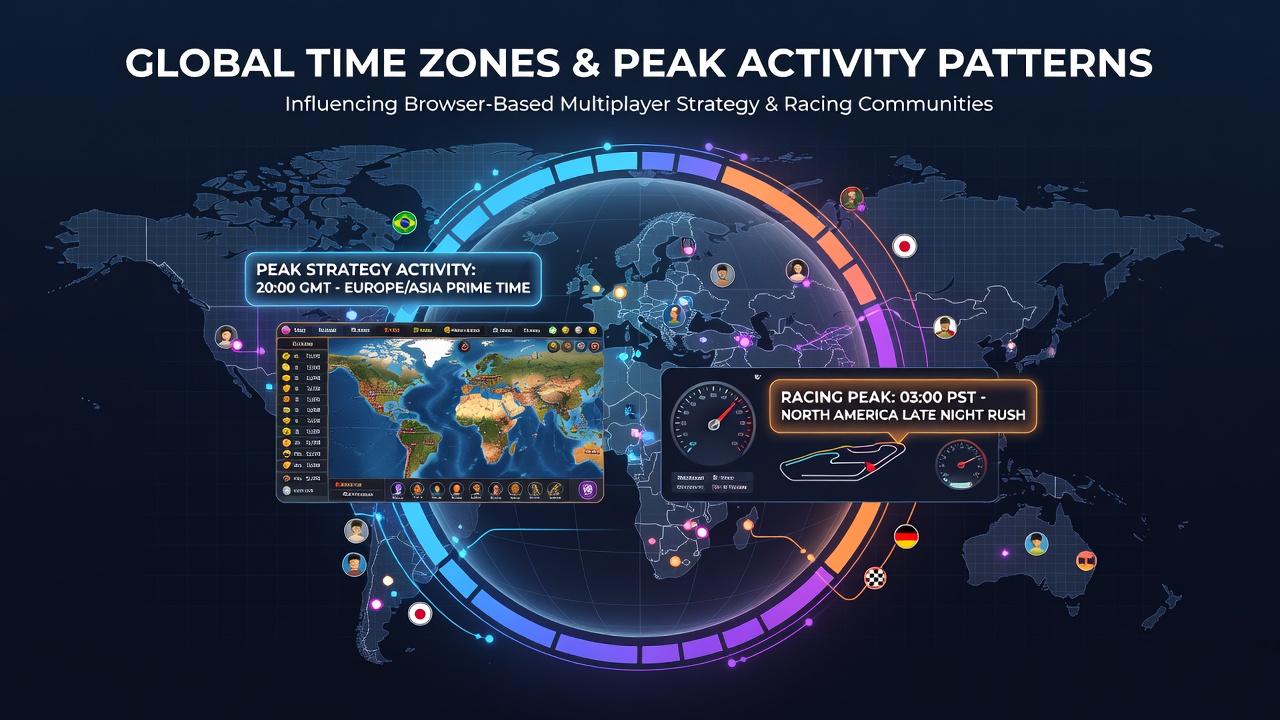
Browser-based multiplayer strategy and racing communities operate across interconnected servers that register player logins in coordinated universal time, yet individual participation follows local clock cycles shaped by work schedules, school hours, and regional daylight patterns. Researchers tracking login data from major platforms note that these cycles create distinct waves of activity as each geographic band enters its evening or weekend windows, while overlapping periods generate temporary surges when multiple zones align.
Mapping Regional Login Surges
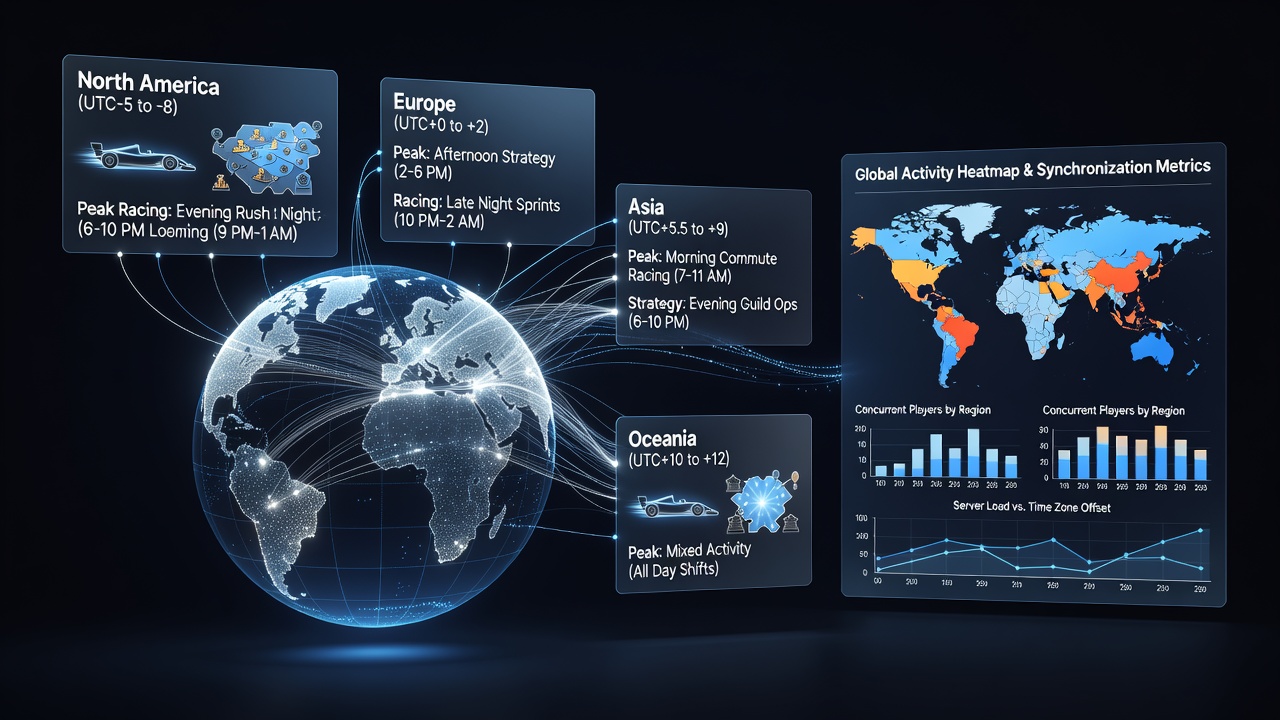
Observers analyzing aggregated telemetry from strategy titles such as turn-based empire builders and real-time tactical matchups find that European clusters reach maximum concurrent users between 18:00 and 22:00 UTC during weekdays, whereas North American servers show primary peaks between 00:00 and 04:00 UTC. Asian-Pacific communities contribute their highest volumes between 08:00 and 12:00 UTC, producing a rolling sequence that keeps overall server populations elevated for extended stretches. Racing game lobbies display similar staggered patterns, with drag and circuit events filling fastest when Australian and East Asian players join simultaneously in late morning UTC slots.
Data from platform operators reveals that daylight saving transitions in March and October shift these windows by one hour in affected regions, forcing developers to adjust matchmaking algorithms so that queue times remain consistent. In June 2026 several large browser titles implemented automated region-balancing scripts that responded to these seasonal offsets within minutes of the clock changes, maintaining stable match availability across the affected zones.
Coordination Challenges and Developer Responses
Players attempting to form cross-continental alliances in strategy games must navigate these offsets, often scheduling sessions around the narrow overlaps when both European and North American groups are active. Racing communities face comparable constraints during time-trial leagues, where global leaderboards update continuously yet live head-to-head races cluster around the same staggered peaks. Platform engineers have introduced features such as persistent asynchronous challenges that allow progress during off-peak hours, reducing the pressure to synchronize in real time.
Quantitative Patterns from Recent Tracking
Studies conducted by academic groups at institutions in Canada and Australia document that browser strategy sessions lasting longer than thirty minutes occur most frequently when at least two major time zones overlap in their active periods. Racing titles show shorter but more frequent bursts, with average session lengths dropping during single-zone dominance and rising again once additional regions come online. These measurements come from anonymized connection logs collected across thousands of daily instances and cross-referenced with public time-zone databases maintained by standards organizations.
According to figures published by the Entertainment Software Association, browser multiplayer categories accounted for measurable portions of total playtime in 2025, with time-zone-aware features listed among the top requested improvements by developers. A separate report from the European Games Developer Federation highlights similar observations, noting that European studios increasingly embed UTC-based scheduling tools directly into their matchmaking codebases to accommodate global audiences without manual intervention.
Platform Constraints and Adaptation Trends
Browser environments impose additional limits because sessions rely on web sockets and cloud instances that scale according to aggregate demand rather than regional demand alone. When one zone enters its peak, server resources automatically allocate toward higher-density areas, yet the underlying code must still handle latency differences that range from under fifty milliseconds within a continent to several hundred milliseconds across hemispheres. Developers respond by implementing region-specific tick rates and predictive lag compensation that activate automatically once login patterns indicate an incoming wave from a distant zone.
Those who have examined retention metrics across multiple titles observe that communities maintaining active Discord or forum calendars experience steadier participation because members pre-arrange sessions around known overlaps. Without such coordination, individual players often default to single-zone play, fragmenting the potential for larger, more diverse matches that draw from several continents simultaneously.
Conclusion
Global time zones therefore function as an invisible but persistent structuring force on browser multiplayer strategy and racing ecosystems, dictating when servers reach capacity, how developers allocate resources, and which player groups can interact directly. Continued refinement of automated balancing systems and asynchronous design elements allows these communities to sustain engagement across staggered daily cycles without requiring every participant to remain online at identical universal times.