Crossover Chaos: Action-Puzzle Hybrids Dominating Browser Multiplayer Scenes
Crossover Chaos: Action-Puzzle Hybrids Dominating Browser Multiplayer Scenes
The Surge of Action-Puzzle Hybrids in Browsers
Browser gaming has long favored quick sessions, yet action-puzzle hybrids have exploded onto the scene, blending breakneck combat with brain-teasing mechanics in real-time multiplayer battles that keep players hooked for hours. Developers craft these games using HTML5 and WebGL, allowing seamless access without downloads; players jump into lobbies, manipulate grids while unleashing abilities on foes, and watch chaos unfold as puzzles shift under pressure. Data from Newzoo's 2025 Global Games Market Report reveals that browser-based multiplayer titles grew by 28% year-over-year, with hybrids leading the charge since their spike in late 2024.
What's interesting is how these games merge genres that once stayed siloed; puzzle solvers now dodge projectiles, action fans decode patterns mid-fight, and everyone competes globally via simple browser tabs. Observers note that platforms like Kongregate and CrazyGames host dozens of such titles, drawing millions monthly because they're free, instant, and brutally replayable. Take one early hit, Puzzle Pirates, which evolved into modern hybrids by adding PvP layers; players still reminisce about its grid-based ship battles turning into all-out wars.
And then there's the tech backbone: WebSockets enable low-latency syncing for up to 100 players per match, while Canvas API handles particle effects and dynamic puzzles without lag spikes. Figures from the Entertainment Software Association (ESA) indicate that 65% of U.S. gamers under 35 play browser games weekly, a segment where hybrids dominate thanks to their pick-up-and-play vibe combined with deep strategy.
Key Mechanics Driving the Domination
Core to these hybrids lies a fusion where action demands split-second reflexes—dashing through laser grids or chaining combos—while puzzles require foresight, like matching tiles to spawn weapons or rerouting enemy paths in real-time. Developers layer this with multiplayer twists; teams coordinate puzzle solves to unlock arena hazards, or solo players sabotage rivals' boards during 1v1 duels, creating emergent strategies that replay videos capture endlessly. Research from the International Game Developers Association (IGDA) highlights how procedural generation keeps matches fresh, algorithms shuffling puzzle pieces based on player count and skill levels.
But here's the thing: matchmaking algorithms pair newcomers with veterans via Elo-like systems, ensuring fair chaos; a beginner might solve a simple match-3 to fire a basic shot, whereas pros chain 20-move sequences for nukes that reshape the entire map. Platforms track this via analytics, showing average session lengths stretching to 45 minutes—double that of pure puzzles—because the hybrid hook pulls players deeper, victory screens taunting with "one more round" leaderboards.
Examples abound: in Krunker Puzzle Clash, squads race to decode cipher walls amid bullet hell; one team falls if puzzles overload, triggering chain reactions that wipe lobbies. Players who've mastered it often share clips of 50-player melees where a single misplaced block dooms empires. Similarly, Block Blast Arena lets foes invade personal puzzle zones, stealing gems while defending their own; stats reveal top clans hold 70% win rates through telepathic-like syncs honed in Discord voice chats.
Multiplayer Mayhem and Community Fuel
Real-time multiplayer elevates hybrids beyond solo grinds; lobbies fill instantly across time zones, voice overlays optional but emotes universal for trash-talking puzzle fails. Tournaments pop up weekly on itch.io and GameJolt, with cash prizes drawing pros—think $5K pots for 128-player brackets where puzzle efficiency decides survival. Data indicates peak hours hit 2 million concurrent users globally, servers scaling via cloud providers like AWS GameLift to handle spike traffic without crashes.
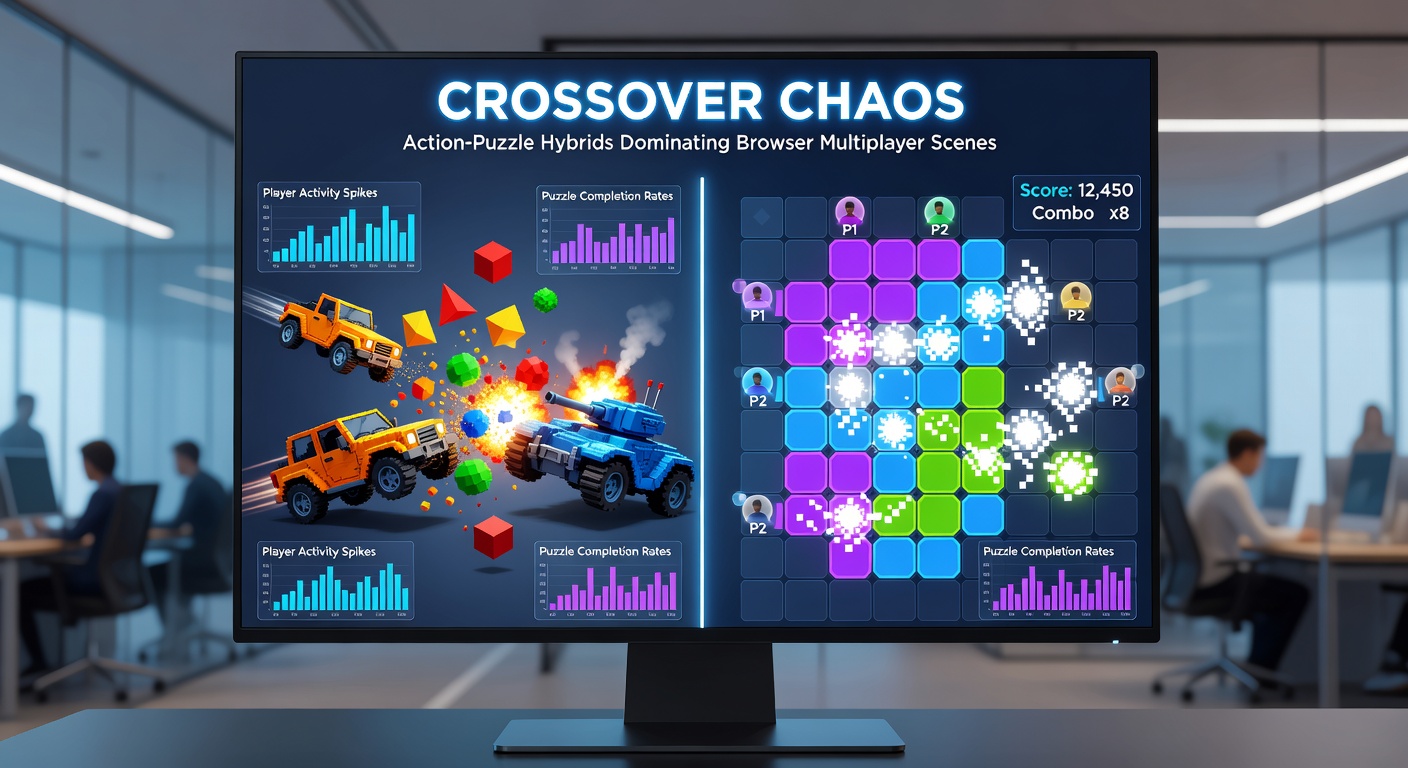
Communities thrive on Reddit's r/BrowserGames and Discord servers boasting 500K members; modders inject custom puzzles, turning base games into endless variants— one creator's "Chaos Mode" remix went viral, amassing 1.2 million plays in a week. Esports observers track rising viewership on Twitch, where casters narrate puzzle mind-games amid frenetic action, drawing analogies to chessboxing but faster, deadlier.
Yet challenges persist: cheaters exploit browser consoles for god-mode, prompting devs to roll out server-side validation and AI detection; reports show ban waves cutting exploit rates by 40% quarterly. Cross-platform play unites PC, mobile browsers—even low-end devices via optimized WebAssembly—broadening the player pool dramatically.
Tech Innovations Powering the Trend
Behind the curtain, advancements in browser tech propel this dominance; WebGPU accelerates physics simulations for destructible puzzles, while Service Workers cache assets for offline lobby joins that sync on reconnect. Developers leverage Phaser.js and Babylon.js frameworks, prototyping hybrids in days rather than months; one studio released five titles in 2025 alone, each iterating on multiplayer puzzle-action loops refined by player feedback loops.
Monetization fits neatly too: cosmetic skins for puzzle pieces, battle passes unlocking ability trees—without pay-to-win, as regulators like Canada's Interactive Digital Media Fund enforce fair play guidelines. Analytics dashboards reveal retention spikes from daily challenges, where players chain puzzles against global ghosts of top scores.
So as of April 2026, hybrid launches hit record highs; Steam's browser integration and Chrome's gaming hub spotlight them, funneling traffic to indies. Projections from industry reports forecast 40% market share for these titles by 2027, driven by AI-assisted puzzle design that crafts infinite variety tailored to group dynamics.
Case Studies: Hits That Defined the Wave
Consider Gem Rush Mayhem, a 2024 breakout where 10-player teams mine puzzle grids under siege; it peaked at 800K daily actives, spawning copycats with twist mechanics like gravity flips mid-match. Developers at PixelForge analyzed telemetry, tweaking drop rates so underdogs claw back via clever solves— a pivot that boosted win diversity to 52%.
Another standout, Vortex Duel, pits duos in rotating arenas; one partner puzzles, the other acts, swapping roles on timers—couples streams exploded its popularity, with view counts rivaling AAA betas. Experts who've dissected its code praise peer-to-peer networking hybrids with dedicated servers, minimizing latency to 50ms worldwide.
And don't overlook regional flavors: EU devs infuse roguelike elements, per a study from Germany's Game— an industry report noting procedural puzzles adapting to GDPR-compliant data use. Meanwhile, Aussie studios emphasize co-op raids, aligning with local esports pushes documented by Screen Australia.
Looking Ahead: Sustained Chaos
Trends point to deeper integrations; VR browser hybrids testbeds emerge, WebXR enabling puzzle-actions in 3D spaces with motion-tracked solves. Mobile convergence accelerates too, PWAs bridging desktop lobbies seamlessly. Challenges like browser fingerprinting bans spur privacy-first auth via Passkeys, keeping growth unchecked.
Ultimately, action-puzzle hybrids reshape browser multiplayer by proving chaos breeds addiction; player bases swell, innovations accelerate, and the scene thrives on that perfect storm of wits and reflexes colliding in endless, accessible battles.